by Ashraf Patel
Share
Related Posts





by Ashraf Patel
Share
In September 2024, exactly a year ago – the UN General Assembly UNGA adopted the UN Pact for the Future. Acknowledging the deep polycrisis of conflicts, climate change and rapid AI diffusion, the Pact commits UN and nations states to step up to these challenges. Last week the UN General Secretary and US on Emerging Technology released its report on Rapid Technological change last week.
“Rapid technological change is transforming our world. Technological inventions across energy, medicine, manufacturing, computing, communications and other fields have opened up new possibilities and opportunities. The pace and spread of innovations, often enabled by exponentially falling costs, have immense potential to contribute to progress on achieving the Sustainable Development Goals, including with regard to the six transitions agreed on by Member States at the Sustainable Development Goals Summit held in 2024.”UN Report on Emerging technologies 2025)
Some figures from across the UN system and beyond help visualize progress and emerging problems:
– 96% of the global population lives in areas covered by the internet, but mobile broadband in low-income countries is 19 times more expensive relative to monthly income than in high-income economies
– Digitally deliverable services account for 56% of global services export, but only 20% for the least developed countries
– AI is accelerating drug discovery, boosting agricultural output, and might increase productivity, but its environmental footprint is growing fast. In Ireland, AI energy consumption has already surpassed that of households.
– Data protection laws are a useful guardrail against human rights abuse and to make sure new technologies are adopted safely.
Progress made on almost half of the targets is insufficient, and 18 per cent of targets show regression from the 2015 baseline. Rapid technological change presents significant opportunities and challenges for policymakers seeking to harness technologies for use towards the common good.
Next Week International Telecommunication Union (ITU) and the United Nations Development Programme (UNDP) will convene Digital@UNGA during the 2025 United Nations General Assembly, creating a space to spotlight digital cooperation across a range of activities and organizations. Through a flagship Anchor Event and a diverse programme of Affiliate Sessions, Digital@UNGA will bring together leaders, innovators, youth, and civil society to explore how digital can be a force for good, for people and prosperity.
But in a fractured geopolitical world, realpolitik and contestations of narratives are core drivers in the quest to shape AI Futures. Let’s unpack
The USAs AI Act 2025 – MAGA nationalism and neoliberalism abroad
The Trump administration’s recently announced AI Action Plan marks one of the most ambitious attempts to consolidate global leadership in artificial intelligence. Built on three main pillars — deregulation at home, exporting a US-controlled “AI technology stack” to its allies, and curbing China’s technological rise. The chaotic nature of Trump 2.0 economics and trade nexus, its not surprising its rooted in a vainglorious attempt of MAGA, it inadvertently tramples on good traditions can be interpreted as one of National AI Plan with strong industry promotion and barriers. Progressive institutions in the US have raised many concerns.
“It is a vision for a select few billionaires. The Action Plan will collectively tilt federal power toward industry self-regulation while diminishing the role of states, independent agencies, and public safeguards, write (Public Citizen,)
This weakening of regulation is a core trend. According to ACLUs Code Venzke
“One notable aspect of the AI Action Plan is its attempt to forestall state AI regulation. Just like the moratorium on the enforcement of state AI legislation that was stricken from the budget reconciliation package that was signed into law last month, the AI Action Plan’s proposal threatens significant harm, raises legal questions, and potentially violates the Constitution”
Even more concerning is the that US AI Action Plan seeks to strip concepts like bias, climate science, misinformation & diversity from AI rules & federal buying standards—redefining “neutrality” through a political lens, writes Camille Stewart Gloster. That will likely come at the expense of technical integrity, she writes.
On the climate change front the US’s deregulation push also stirs up more immediate problems, particularly concerning AI’s huge infrastructure needs. Data centres — core to AI progress — are extremely resource-hungry, needing significant energy and water.
While the US and its corporations led the first generation of world wide web development in the early 1990’s enabled by globalisation open borders and optimism, its technology leadership today is waning, and its new AI Action plan is hark back to an Orwellian dystopia model of information discourses, one rooted in a slew of narrow nationalisms. How times have changed?
China’s Global AI Policy model unveiled
A post COVID China has scaled in terms of global supply chain resilience, as well as technological leadership. AI is at the centre of these multiple innovation clusters coming out of China. China’s AI Policy was unveiled at World AI conference in June 2025 is a model that communique and remarkably progressive and in line with UN Global Compact, and UN institutions, UNESCO ITU etc. Important for the Global South it locates AI within the broader UN sustainable agenda making it accessible, affordable and tool to address climate crisis.
China’s new AI Plan was unveiled at the World AI Conference in June and conference and communique to embrace AI as Global Public Good. Key objectives include:
- Promote the innovation and development of artificial intelligence. Adhering to the spirit of openness and sharing, encourage bold attempts and explorations, build various international scientific and technological cooperation platforms, create an innovation-friendly policy environment,(Point 2, China AI Global Policy )
- Promote artificial intelligence to empower thousands of industries. Promote artificial intelligence to empower industrial manufacturing, consumption, business circulation, medical care, education, agriculture, poverty alleviation and other fields, promote the in-depth application of artificial intelligence in autonomous driving, smart cities and other scenarios, and build a rich and diverse, healthy and good artificial intelligence application ecology. ( Point 3 , Chinas AI Policy)
- Accelerate the construction of digital infrastructure. Accelerate the construction of global clean power, next-generation networks, intelligent computing power, data centers and other infrastructure, improve the layout of interoperable artificial intelligence and digital infrastructure, ( Point 4, )
BRICS new Plan for the Global South
The leaders of the BRICS nations – Brazil, Russia, India, China and South Africa – published a joint statement calling for a global governance framework for AI that is inclusive, representative and rooted in the principles of sovereignty, development and ethical responsibility. The guidelines, which strictly refer to the use of AI in the non-military domain, should be applied through either domestic or applicable international frameworks, as well as through the development of interoperable standards and protocols, in inclusive, transparent and consensus-based processes, the statement read.
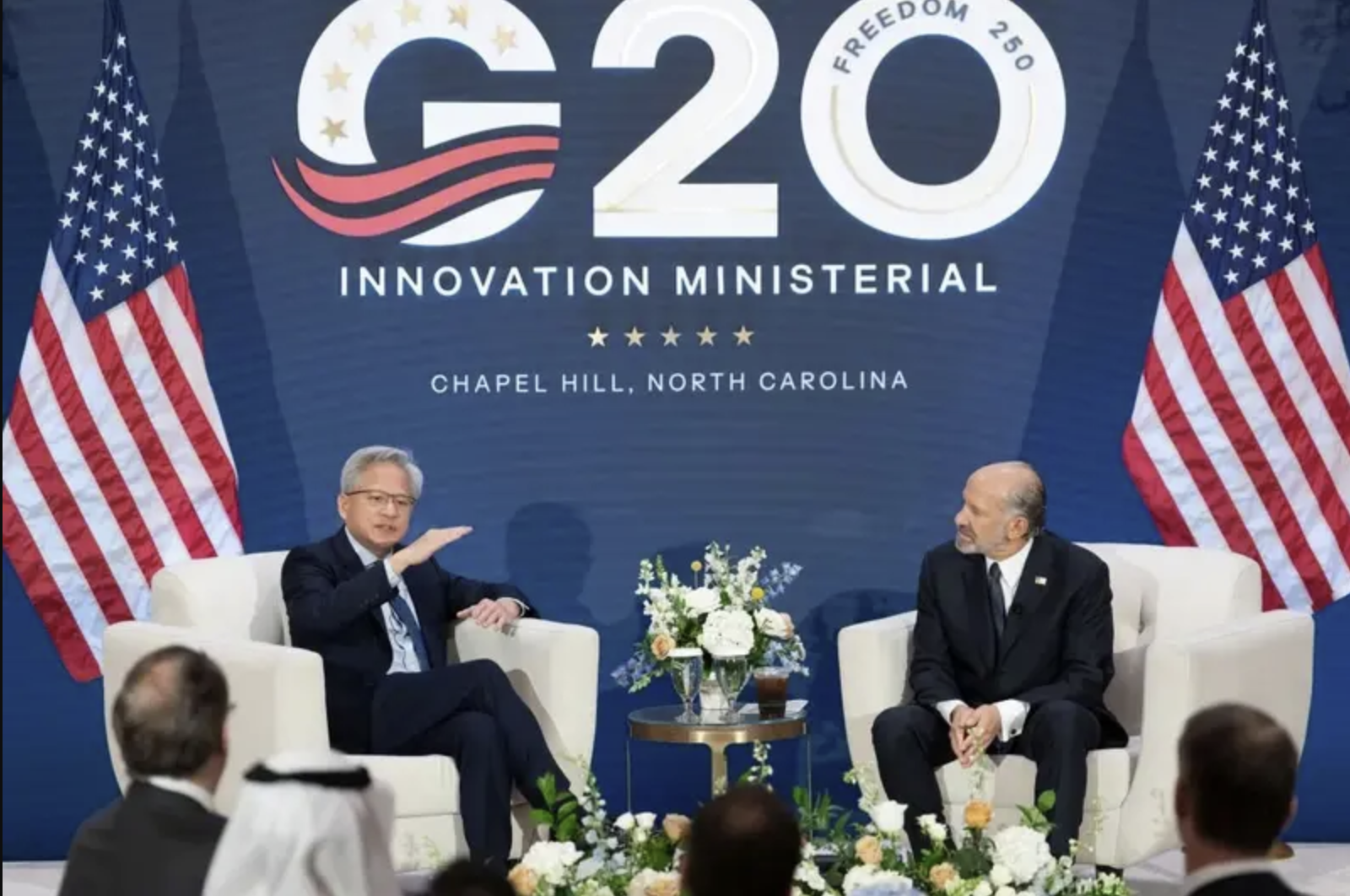
The G20’s Digital Economy priorities – Is it enough to bridge the digital divide?
The South African Presidency of the G2 in 2025 comes at a time of increased international focus on the digital economy, particularly its instrumental role in development and economic and social reconstruction following the COVID-19 pandemic. The recent United Nations (UN) Summit of the Future and its Global Digital Compact (GDC) set out objectives, principles, commitments and actions for a new global digital cooperation that will lead to more equitable and just outcomes. In 2025, the 25th review of the foundational framework for global digital cooperation provided by the World Summit on the Information Society (WSIS) outcomes is a pivotal opportunity for global action to strengthen and broaden efforts towards an inclusive digital economy and society that is people-centred. In this context, South Africa and Africa looks forward to building on the achievements of past presidencies, focusing on the following key issues:
- Connectivity for inclusive digital development
- Digital public infrastructure and transformation
- Digital innovation ecosystems: unleashing the potential of Micro, Small and Medium Enterprises (MSMEs)
- Equitable, inclusive, and just artificial intelligence (AI).
As the UN, G20 and BRICS seek a global consensus on AI and meeting the UN SDG agenda, realpolitik headwinds will make it interesting phase in the global as shifting powers and new nationalisms in the North rooted in economics and identity and culture are engaged in deeply contesting grand plan narratives for this most strategic technology of the 21st century.
Will AI be socialised or monetised or even worse, weaponised?
And what trajectory can Global South and Africa choose to co-shape their future prospects in this world order?
Ashraf Patel is a Senior Research Associate at the Institute for Global Dialogue associated with UNISA.
This article was originally published by IOL