by Ashraf Patel
Share
Related Posts



AFP
by Ashraf Patel
Share
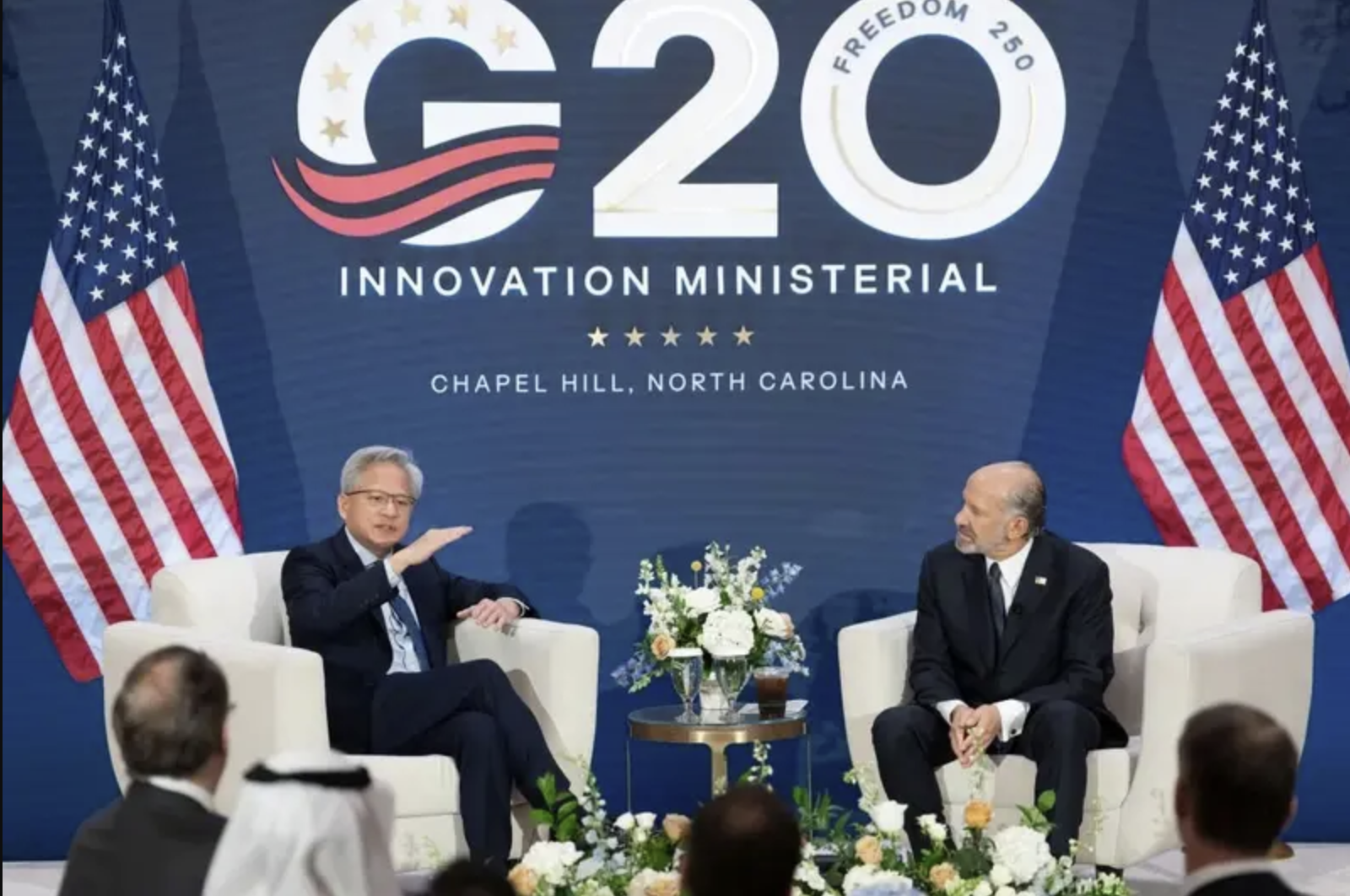
Foreign Ministers of G20 nations met in Asheville, North Carolina, under the stewardship of US Treasury Secretary Scott Bessant, joined mainly by private-sector representatives, to discuss how G20 countries can promote private-sector-led growth and innovation, AI, and financial innovation.
In his introduction, Bessant explained the significance of Asheville, North Carolina, hosting the G20 FM meeting in the area devastated by Hurricane Helene.
Ironically, in the week of the devastating Nepal flood disaster that left thousands dead and missing, the Nepal floods nor climate change or climate finance were mentioned in the Communique. In a world of ever wars, invasions, and US violations of international law, not one sentence alluded to these, underscoring the power dynamics in the world today.
To start off, South Africa is excluded from the G20 meetings in 2026, which also means that our progressive development agenda is erased. Important G20 legacy initiatives – the International Panel on Inequality IPI led by Prof. Joseph Stiglitz, as well as the Manuel Finance panel tasked with assessing debt, cost of capital and key IFI financial reforms. Yet, none of these was even acknowledged.
Ironically, the meeting took place in the week as the US National Debt topped $ 40 trillion. This means that every US household (except the top 1%) is $ 300 000 in debt. Militarism, deregulation, and new tax breaks for multinationals are deepening the social crisis and inequality within the US.
In an interconnected world, the US National debt crisis is socialised and dumped onto the world. It’s no surprise that the Trump administration’s core interest in G20 is mainly the Finance and AI track.
This year’s G20 comes atop a global recession with massive energy and food inflation due to US attacks in the Middle East and shipping lane choke points, with Global South and Africa facing a dire cost of living crisis.
Furthermore, critical minerals extractivism is tied to unfair FTA deals in Zambia, and Kenya, etc are signs of the ‘new AGOA normal’ – one where unbridled access to Africa’s critical minerals and data.
Regardless of the deepening contradictions and US economic nationalism and militarism, the Global South’s agency and multilateralism are deepening in multiple domains.
In a world of polycrisis, development and governance co-operation is vital. Important work of the UN COP, UN Women, ILO, UNESCO and other domains such as AI governance will continue to deepen as Global South and Middle powers find common ground in implementing the UN Pact of the Future.
In this context, South Africa’s exclusion in 2026 is, in a way, a blessing – and an opportunity to reach out to the Global South and G77. Here, South Africa and progressive states such as Brazil, Mexico, Malaysia and other middle powers should focus diplomatic and economic outreach on the “masses of the Global South who suffer in an era of energy and food inflation and need urgent WTO reforms, agriculture, and climate finance. The UN F4D and UN COP 31 agenda and support for climate emergencies are more urgent than ever.
When the US Subprime mortgage crisis spread in 2009, it ushered in the worst financial crisis. In its ashes, the G7 incorporated core Global South nations to save global capitalism, cementing the G20.
As the UN General Assembly UNGA convenes this September, member states need to submit progress reports on the Pact of the Future, which was signed in 2024.
As the global polycrisis and social, environmental, and economic crisis deepens, South Africa and Africa’s future need to be firmly anchored in sovereignty, solidarity and a sustainable development agenda for and with the Global South.
Ashraf Patel is a Senior Research Associate at the Institute for Global Dialogue, UNISA.